Seiji Eicher
Crabbing
Some notes on the topic of NorCal crabbing.
Licensing
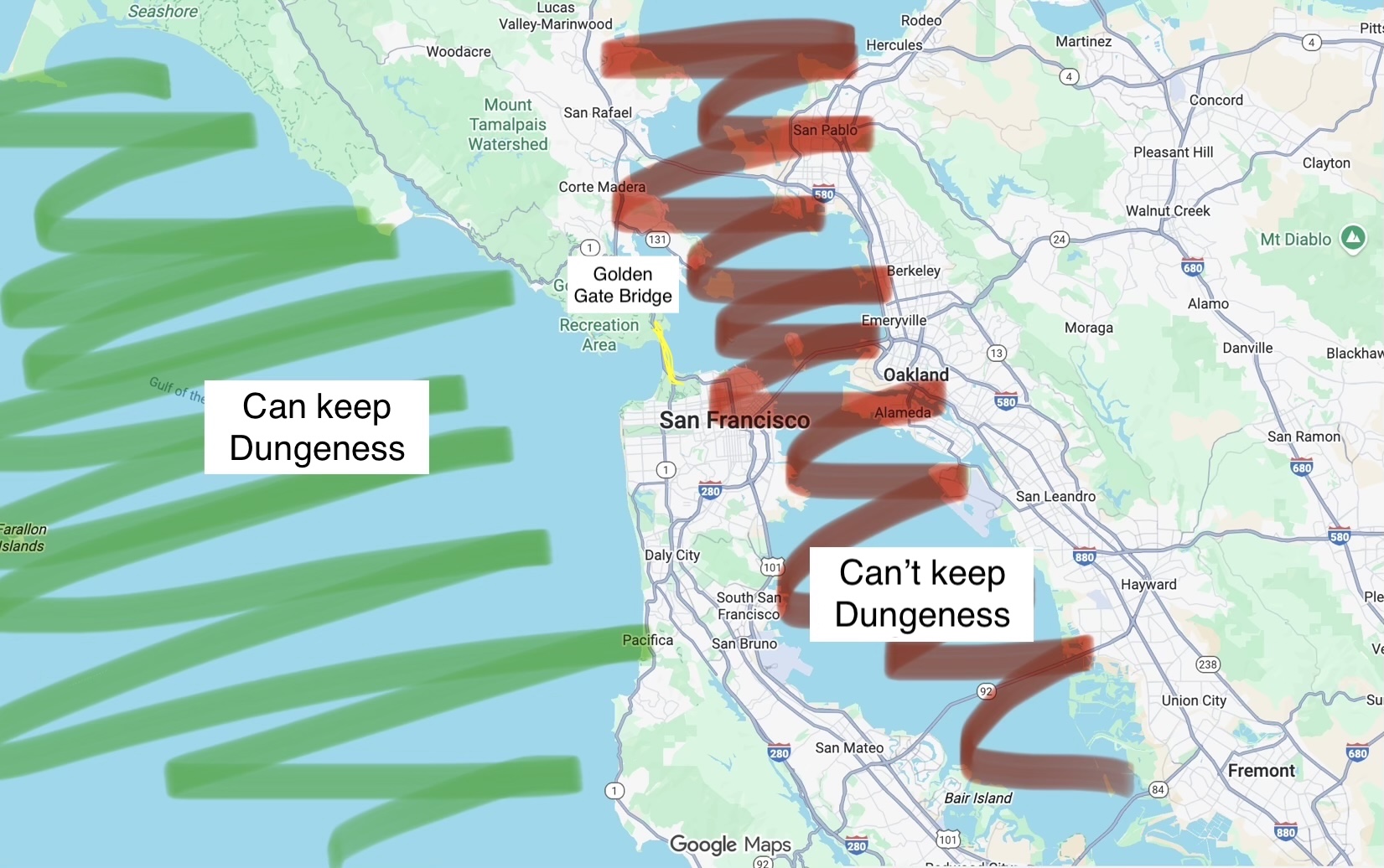
You can crab for free on the piers, but need a license to crab from the beach. Why crab from the beach? You can't keep Dungeness in the Bay ($400 fine, "inside the Bay" == Bay east of the GGB). Thus the draw of the Pacifica pier.
Also you are required to have a crab gauge with you while crabbing. Here's a link to the guidelines for the season and keeper sizes.
Itineraries
I suggest making a plan to crab for about 3 hours. The amount of setup is not really worth it for shorter imo. You might get hungry if you stay longer. No matter what, take a ton of pictures!
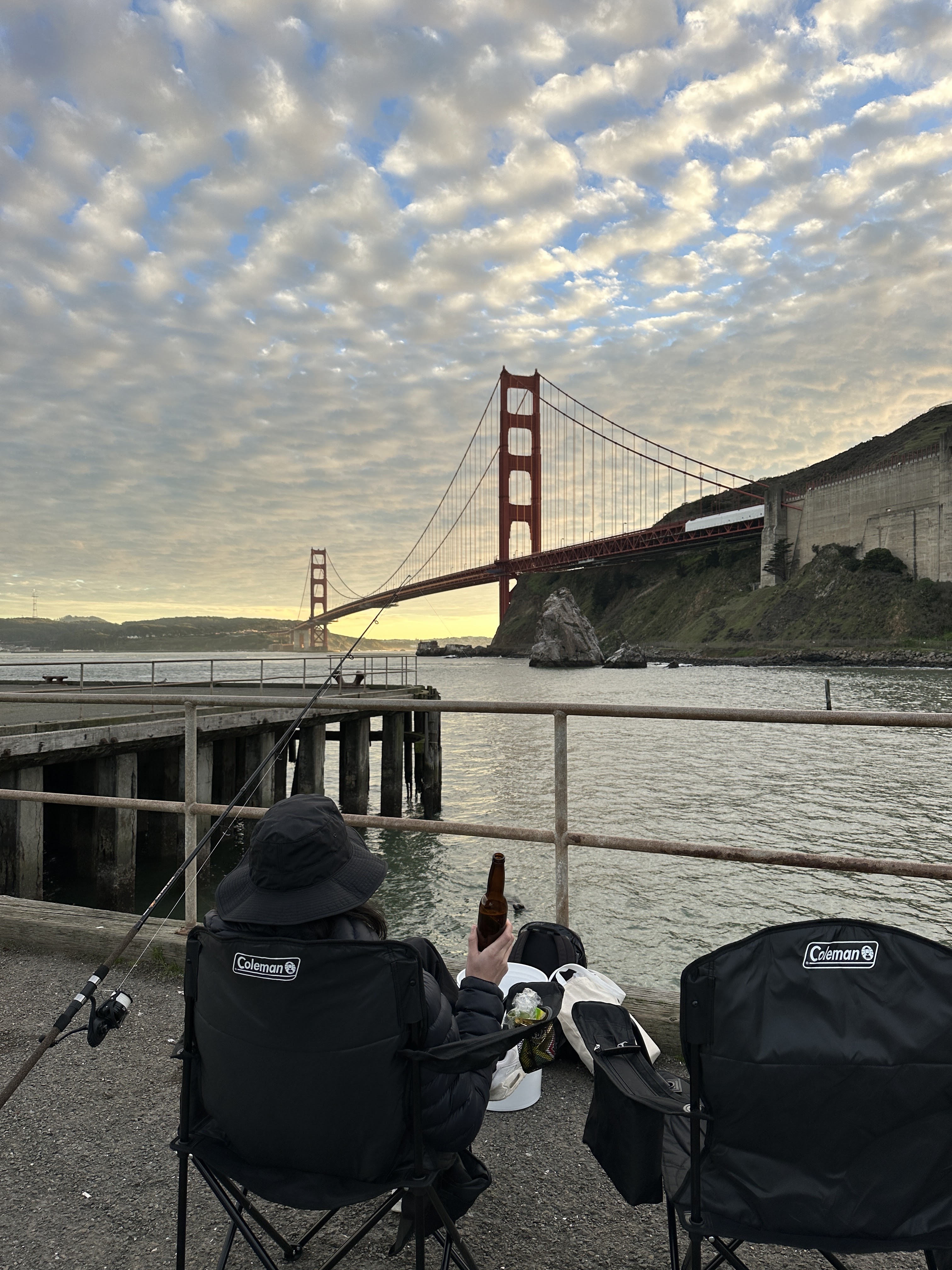
- Torpedo Wharf - Good beginner location since it's easy to get to from the city and has a nice view.
- Sausalito - This is my favorite. Get a sandwich + bait at Davy Jones Deli, then head to Moore Rd. Pier for crabbing. It's usually pretty chill. After you're done, go to Scoma's for seafood that is fine (Marin food is not that good on average), then to Lappert's for the "Udderly Pure" flavor ice cream.
- Half Moon Bay - Has a pier/jetty for crabbing, Half Moon Bay Brewing for drinks after. Credit to Kelvin for this suggestion.
- Pier 14 - Pier into the Bay, parking can be difficult. Ozumo for food after. LLM team did this and "had a blast"
- Pacifica - Extremely popular and canon for sure. You can keep Dungeness here since it's outside GGB.
Snaring
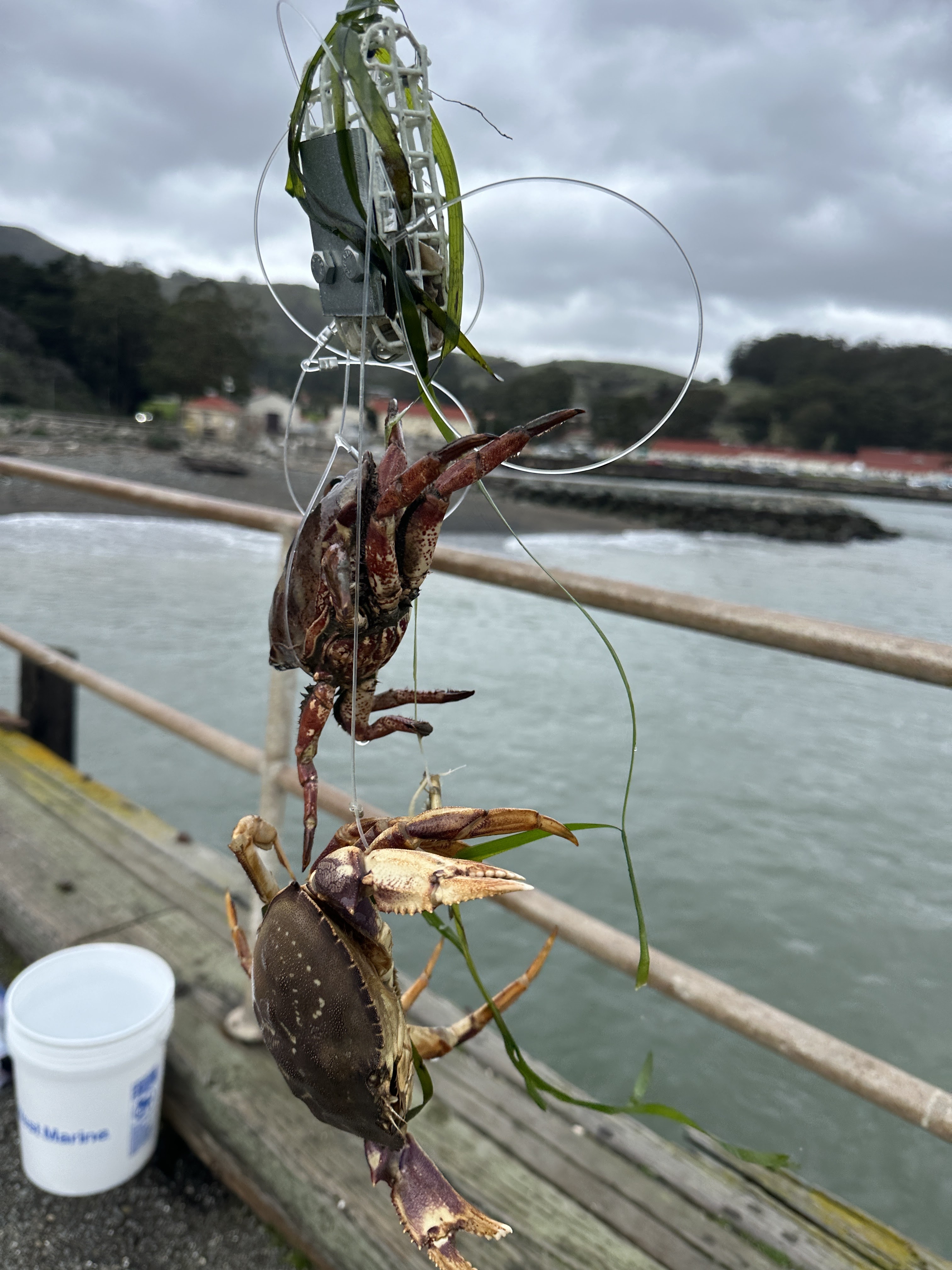
Pros: Way more fun than nets. Only way to catch crabs from the beach.
Cons: Ed Edd and Eddy fishing technique one step removed from using a chicken leg on a string as bait. Unforgiving for beginners.
Gear needed:
- Snares
- Rod and reel (heavy tackle rod for heavier snares)
- Heavy braided line (50-100lb) - lighter line will snap with heavy snares
- Snap swivels
Technique: Here's a link to a good clip on setting the snare. This part is CRUCIAL to whether you will get any crabs snaring. You must master setting the snare in a fluid motion and maintaining constant pressure on the retrieve to avoid jerks.
After you cast, leave the snare out 10-15 minutes. It's good to place your rod at a low angle against the rail of the pier in case the snare gets taken by sea lions. Rest the eyelet a little below the railing with that in mind.
On snare sizing/weight: Another major reason you won't catch crabs snaring is because the snare is too light and moving around too much with the current. Buy one from Vivid Snares that's heavy with a sand wedge or just add pyramid weights to a non-weighted one. The snare needs to sit in the same place to give the crabs a chance to find it.
Use a palomar knot to attach your snap swivel to your line. It's really easy and proven to be among the strongest knots.
How to cast a snare:
On casting the rod: the heavy braid line I recommended can cut your finger as it rapidly unwinds. Use a bit of sport tape on your finger pad as you practice casting (assuming you have a spinning reel) to protect yourself. Rotate the silver part of the spinning wheel away from you to make it harder to flip it closed mid cast.
For the cast setup: there should be 3-4 inches of line from the end of the rod to the snare. Rotate the eyelets to face up, hold the rod at arm's length, and rotate it like a trebuchet. Release the line a bit after the apex of the swing. Make sure to use a heavy tackle rod for heavier snares in order to get a longer cast. Casting is most important for the beach, though. For a pier it doesn't matter quite as much how far you cast.
Hoop Nets
Pros: Obviously much easier than snaring. Yield may be 3-4x the equivalent duration spent snaring.
Cons: Lack of aura.
Gear needed:
- Hoop nets
- Throw line or rope
- Bait box
Technique: You just need to load the bait box and pull them up every 15 minutes or so. Ask Steph at Gus' the best way to rig the hoop nets with line because I don't know. I just tied them with a bunch of bowline knots but there must be a better way.
I recommend bringing both snares and nets if you can. Run a couple nets while you practice snaring.
Where to Buy Gear
Required regardless of technique:
- Crab gauge
- Bait (squid, chicken, etc.)
- Bucket (preferably with lid)
Gus' Discount Tackle - This is the best place and Steph is the best. She can tell you anything you need to know about crabbing tbh. Get some hoop nets from here + line and bait boxes. Consider buying everything from here actually.
Vivid Snares - They have the awesome oversized crab gauge and snares. Joel (the owner) is a Bay Area guy. A lot of stuff is glow in the dark which is cool. In the past I've gotten:
- Vivid Snares (2nd generation) crab snare, 7 oz. ($20 each, I got 3)
- Vivid Snares (2nd generation) crab snare, 13 oz. with sand anchor
- Glow In The Dark Jumbo Crab Gauge ($9)
Crab Slayer - Also has some super cute snares. I got Hello Kitty snares from them.
West Marine - My stuff from West Marine:
- 11' Okuma Crab Snare Special Spinning Rod, Heavy Power
- Eliminator 6500 Spinning Reel ($117.65)
- Spectra Braided Fishing Line, 30Lb, 300Yds, Hi-Vis ($28.05)
- Crab & Clam Gauge ($3.97)
- 5 Gallon Plastic Bucket ($7.23) + Lid
- Crab Throw Line, No Weight
- Men's Long Finger 3 Season Gloves
- Scissors
Bait
You can get bait (I prefer squid for arbitrary reasons) at Davy Jones Deli or Gus'. Pack the snare as full as possible with bait. You can bait it with basically anything. Chicken gizzards, chicken legs, oyster juice, whatever.
Handling
Flip crabs on their back to put them to sleep. Then grab them by the back two legs.
Timing
Try to go at slack tide I guess. I can't be bothered to do this but you "should."
What to Bring
Bring chairs, snacks like Chex Mix, and drinks. Bring hand sanitizer and wet wipes!
Always make sure to dress warm! Crabbing season is always cold, and being near the water is colder than you'd expect, especially with the wind. Sitting still for so long also makes things colder. Down jackets, fleece, hat, etc. Sunglasses can be nice.
Really sad but be prepared to lose gear, especially at the pier. It gets caught on things (probably other gear) underwater and probably won't come free. Rinse whatever gear you manage to bring back at the end of the trip in fresh water when you get home so it doesn't get rusty.
Keeping Crabs Fresh
Crabs need (aerated) salt water to live and stay fresh until you eat them. So you can get a lot of salt water in your bucket, or an aerator if you have a lot of crabs so they stay fresh until you cook them. You might want to get rubber bands if you're a very serious crabber, since they can cut each other's claws/legs off in the bucket.
Fun Facts
Learn the difference between a male and female crab. It's basically just the width of the apron (males are more pointy). Consider releasing more females of marginal size to improve spawning potential for future trips.
Crabs prefer colder water, i.e. generally deeper water. They may come closer to shore when it rains.
Cooking
I'm allergic to crustaceans so this part isn't as important to me, but you can boil or steam them. I think it takes a pretty long time to cook rock crab thoroughly since the shell is so thick. ~22 minutes is my estimate. They are difficult to overcook. And yes I have eaten them even though I'm allergic.
For Dungeness there are a ton of recipes you can follow. Check the domoic acid reports to see if it's safe to eat the crab butter.
They are great with a ginger garlic green onion oil type dip or with ramen.
Resources
- Crab Snaring 101 - here's an additional resource
- Kaitlyn Bui - does a ton of educational videos as well